
Travel Destinations
Belize
We were located in Stann Creek, Belize with Earthwatch teen group to spend a week researching sharks with Dr. Demian Chapman. We set up bait traps to observe sea life, collected data on sea conditions, tagged and collected shark DNA using data to see how shark conservation efforts were helping save the sharks in Belize. Data was recorded like Salinity In, Salinity Out, Temperature In, Temperature Out, Time In, and Time Out.
Typical Day working with Earthwatch as a Citizen Scientist
Earthwatch teen program works to connect people with researchers to help with their research while they learn how to save and protect the environment. This program was a teen program for 15 to 18 year-olds.
6:30 AM Wake Up
7 AM Breakfast
8 AM Prepare Bait Boxes on Dock
8:30 AM Head Out on Boat to drop Bait Boxes
1 PM Lunch
2 PM Watch Footage from the Cameras
4:30 PM Snorkeling
6 PM Dinner
8 PM Studying for Next Day
10 PM Watch Sharks on Dock
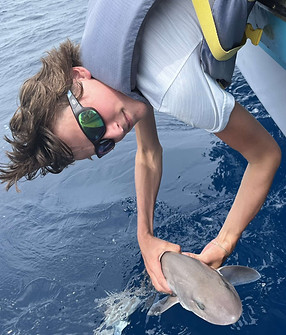
Catching Shark to Tag

Preparing Bait Box Contents

Observing Bait Boxes

Working as a Team
Tagging Sharks
On this research project student researchers were able to work with local people and researchers to protect the sharks. When local people work with scientists the outcome to save the sharks increase because they have an interest in the results. As a student I was able to tag a shark on my own. I measured sharks and documented data on the shark. Then the shark was tagged and a small amount of the under fin is taken for DNA. We would measure the length of the shark in the boat or on the side of the boat to get a measurement. We use long lines to catch sharks for tagging. We would take the biodegradable hook out of the shark's mouth. The researchers were very excited day 1 when they caught a very large Tiger Shark that they could collect data could be collected. He was about 8 foot long. Their stripes disappear as they get into old age.

Tiger Shark from Day 1

Boats used for tagging sharks.

The yellow-green tag is on the shark fin.

Measuring Shark
Conservation and Learning about Sharks with Dr. Demian Chapman
Dr. Demian Chapman is an International Shark Expert, Director of Sharks and Rays Conservation at Mote Marine Laboratory and Professor at Florida International University. Dr. Chapman leads the FinPrint team to work to come up with better ways to protect sharks and rays. In many countries the fins from sharks are used to make soup which is causing large numbers of sharks to be killed. China is a country that kills large numbers of sharks for this purpose. Dr. Chapman received funding from Ellen for shark conservation and leads Ellen's social media for shark week.
Dr. Chapman has worked with locations all over the world to pair up scientists, fishermen/ locals, and government to work together to save sharks and the environment they live in. In Belize they put incentives in place for fisherman to tag sharks instead of catching them. They receive some income from this work and are working to save the environment. When everyone works together on the environment everyone wins.

In the Classroom Learning
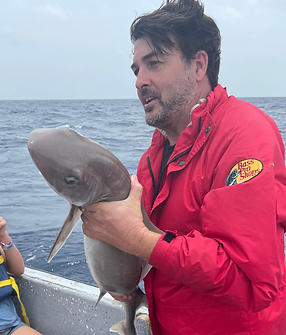
Educating Using a Shark

Explaining the Structure

Explaining How to Record Data
Observing Bait Boxes
Bait boxes were set up and videos of Caribbean Reef Sharks were monitored each day to determine how the reef was recovering with the new conservation measures that were put in place. The students helped catch bait and prepare bait boxes. We helped set up the BRUVs (Baited Remote Underwater Video Cameras) Go Pro Station to observe the sea life as it approached the bait boxes. Nurse sharks are like the catfish of the sea. Every time the bait boxes are put down the nurse sharks come out of everywhere to eat. They can even suck the bait out of the bait box which no other shark can do.

Watching Coverage of Bait Boxes

BRUVs (Baited Remote Underwater Video Cameras) Go Pro Station
Ray Coverage

Bait Box
Bush Willies/ Iguanas
The locals said it was impossible to catch the iguanas they called Bush Willies or Bamboo Chickens. We were able to carefully catch one, observe it, and release it. They can grow to 6 feet and 20 pounds. They eat fruits, vegetables, and insects. They have sharp teeth. Iguanas can swim and love the sun. It is protected now and used to be eaten by people.

Bush Willies

Carefully Observing the Iguana

In Natural Habitat

Love Humid Environment